LESSONS FROM LADIES IN THEIR EIGHTIES:
- brittbryan1001
- Jul 30, 2022
- 9 min read
Updated: Jul 31, 2022
And how can we apply their wisdom today.

Photo cred: https://www.bbc.com/news/magazine-36854809
IT’S A PROCESS.
Life is a process, yes. But what I mean is getting my hair done, it’s quite a process. It takes hours.
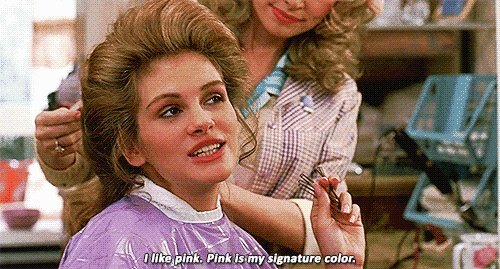
One time while I was at the salon waiting for the color to process, there was a little old lady, dressed from head to toe in pink, sitting in the chair beside me getting a hair cut. She was clearly in her eighties, but so vibrant and youthful that all the young girls were oohing and ahhing over how great she looked for her age and how stylish she was. I agreed.
“I wish I could pull off that color,” one young woman said. Which prompted the older woman to say this:
“Listen girls. Pink is your color as you get older. It softens everything."
What a funny, blanket statement. Pink is YOUR color. Pink cannot honestly be everyone’s color. I felt *pretty* certain it couldn’t be mine. For one, I owned exactly zero pink items in my closet.
Also, I questioned whether you could honestly take someone seriously who wears a lot of pink. (No offense to you Steel Magnolia fans who hold tight to the conviction that pink is your “signature color.”)
I decided to try it anyway. I bought a light pink blouse and when I put it on, I thought, “I’ll be darned. Pink really does soften everything.”
This experience got me thinking about all the advice I’d been given over the years by people older and wiser than me. Which is what inspired this post.
So, here are some of my favorite lessons I’ve learned from Ladies in their Eighties.
1. WEAR MORE PINK: Change is good.
I’m not actually suggesting we should all wear more pink. The point I hoped to make with that story is that sometimes, we reach different phases in our lives where our preferences and opinions change. They evolve and mature or we outgrow them. Often it turns out that what worked before simply doesn’t work anymore, or at least not like it used to.
In my younger years, pink wasn’t for me. Now, I love it.
Not that long ago, I used to be able to run further before my knee started hurting. Now just a few minutes in, the pain sets in and my knee begins to bother me. I used to not think very much about my skin; but what worked for me before is not effective anymore. This doesn't mean I stop running or quit taking care of my skin; it just means I adjust.
Of course, this runs a lot deeper than outer appearance or the condition of our bodies. This wisdom also applies to our world views and assumptions. It always fascinates me when I hear someone admit that they have no interest in hearing new information on a topic they’ve already formed their opinion around. Their mind is simply made up, no use in even having a discussion with them.
(We do this a lot with politics and religion. I could say so much more on that topic, but I will leave that for another time.)
I often wonder why it is that so many of us tend to listen only to people who think as we do on a matter, closing our ears and minds to other views. Perhaps it’s a fear of the unknown, or a fear of maybe being wrong; which displays a lack of humility, a problem in and of itself.

But a deeper problem with blindly clinging to our own views is that it leads to biases, and biases create blindspots. Like a horse that wears blinders, it ensures we will only ever see what is directly in front of us, missing the world around us.
The point I’m making is that sometimes, what worked for us in the past may not work anymore, once we obtain new information or encounter new situations and people. And we can either remain stubbornly attached to the “old” and miss out on the beauty of the new, or we can embrace the new and discover what lies ahead.
A final thought on this point: Change can be scary but also really good and healthy. I mean, we once thought the world was flat, the sun moved around the earth, and that the Bible justified slavery. Thank God new information changes our world views and beliefs.

2: TAKE MORE TIME: Add value for others while you wait.
Recently, I waited a very long time for a doctor’s appointment. There was another woman waiting a while as well, but she seemed completely unbothered by the intrusion into her schedule, while I was borderline appalled.
When the receptionist apologized for their running behind, this lady took me by surprise with her response. She said, “Oh honey, don’t even worry about it! So much of life is about waiting, isn’t it? It’s no big deal.”
I learned a lesson about patience from this experience. And the woman was, perhaps you’ve guessed it, a lady in her eighties.

The Supremes said you cant hurry love. Foreigner spent a lot of time “Waiting for a Girl Like You” and The Rolling Stones sang about “Waiting on a Friend.” Tom Petty said the waiting is the hardest part. The Beatles and Maroon 5 both have a song titled “Wait” and even Guns ’n Roses lamented waiting in their song called “Patience.”
This doesn’t come close to covering all the songs and poems and books about waiting. Apparently, the word “wait” occurs in the Bible 139 times.
The point is that much of life is about waiting - something I am clearly not very good at. And yet, it seems to be true that good things come to those who wait.
Karen Salmansohn, who has written several self-help books, says, “The best things in life are often waiting for you at the exit ramp of your comfort zone.”

That’s an interesting way to flip the script: good things are waiting for us. We aren’t waiting for them. That adds some hope into the mix, doesn’t it? And hope is perhaps the most crucial thing to have while waiting.
It’s funny how waiting is what I most do not want to do, yet the waiting is what seems to teach me the most. So often, the setbacks in my life turned out to be setups for something better. Disappointments then are more like commas, not periods. (More on that later...)
The reality is that sometimes you just have to wait; and sometimes, we waste a lot of life on waiting. This is what can paralyze us: How do we know if something is worth waiting for or not? I don’t know the answer to that. But, I do think it’s the wrong question. I think some better questions are:
What can we do with the waiting? What can we learn from the waiting?

My interaction with this lady in her eighties showed me that one thing we can do is we can step outside of ourselves (and our impatience) and we can serve someone else in some way. Our conversation made time speed up, and before I knew it, the waiting was over. Not only did she distract me from my own impatience, she added value to my day, in the midst of her own day being thrown off course.
What a selfless gift.
3: MAKE MORE ROOM: Be open-minded.
My new friend went on to talk about how fantastic getting older is. She said she wouldn’t go back to being young for anything.

“Young people get so worked up about things.” She said. “When you’re young, you sweat the small stuff. You’re always in a hurry. The older you get the more you realize there’s no need for so much resistance.”
I thought that was a good word to describe the current climate we find ourselves in. When I look all around me today, that’s what I see: resistance.
We fight about everything. Politicians create wedge issues that force people to be either with them or against them: resistance. Then these political issues create battles and barriers between friends and family: resistance. Spouses fight over who is right and who is wrong and the issues build up until there is a wall between them, and no one wants to be the first to apologize: resistance. Teenagers today do not want to get a job because they don’t want a boss telling them what to do: resistance. We are offended by everything we hear that is in opposition to what we believe to be truth: resistance.
Isn’t this all just so exhausting? What if we took a lesson from my friend in her eighties and instead simply decided we would not spend our life resisting?
Let me tell you what I don’t mean. I don’t mean we cave to every situation. I’m not suggesting we cultivate weak characters or become doormats. I want to be real clear about something: sometimes resistance is necessary. Racism, gender inequality, poverty: these are injustices that demand resistance. Today, inequities in all its forms are still calling for and requiring our resistance.
But what I do mean to suggest is that maybe we are not, in fact, right about everything. Maybe we don't have all the information. And maybe, we just stop clinging so tightly to how we think something should be. When we hold onto things with tightly-clenched fists, we suffocate love. But when we loosen our grip, we allow room for love to breathe and grow. We become less self-centered and more others-centered.
My friend helped me to see that being open-minded is a much better way to live.

4: GIVE MORE GRACE: Form connections, not divisions.
Eventually our conversation took on a more spiritual tone. She said, “The older you get, the more you realize that we aren’t as divided as we are made to think we are. And we over-complicate God. It’s fairly simple: God is love.”
She went on to tell me that the more you live, the more people you meet, the more experiences you gain, the more you realize that we are all a lot more alike than society seems to want us to believe. And the more you love, the more opportunities you will have to see this in action.
But, it's hard to love someone who is different from us. Or, who has offended us. It's hard to love someone we feel has wronged us, either directly or just because they stand in opposition against something we believe in.
We tend to extend more grace to those who are close to us than to those we do not know. I guess it’s the fear of the unknown that seems to prevent us from forming connections outside of our inner circles.
The problem, though, is that fear of “the other” leads to hate and even more separation. But when we release that fear, suddenly there is more room for love. Love allows for opportunities to see commonality and leads to connection.

5: HAVE MORE FAITH: Plans change. (But remember - change is good.)
All the talk about how God is love culminated in this question: What is God’s role in how our lives turn out?
Some people believe that God has a specific plan for their life and he’s in total control. A “Jesus take the wheel” kind of approach. Others feel more personal responsibility for their lives, like they are the ones calling the shots.
My new friend takes a middle-road approach. She says you work your plan, but you don’t stress too much if things don’t go exactly as you planned.
She said, “Look at me. I had so many plans for my life that didn’t work out. The older you get, the more you realize that life rarely turns out like you plan. BUT - it’s often better.”
She then told me something I seem to be learning more with every passing year, which is this:
God’s plans are often better than our own.
And I knew in my gut that what she said was true. If my life had gone according to my own plans, things would look vastly different for me today. (I’m sure you can relate to that as well.)
When I was going through my divorce, it felt like my entire world was falling apart. There was a lot of pain and feelings of loss involved in that perceived failure. I had prayed so hard for God to fix my marriage. I couldn’t understand why he wasn’t answering my prayers. Wasn’t that a good prayer?
Then one day, I heard a song with this lyric: “Your world’s not falling apart, it’s falling into place.” And it hit me like a ton of bricks. My world before was a mess. Clinging to a broken marriage and refusing to address our massive problems was not the way I hoped my life would turn out. It was certainly not the way God designed marriage to be. Perhaps my plans were not best, after all.

I think sometimes we worry too much about whether or not God is doing his part, and we neglect to do our part. The older I’ve gotten, the more I’ve realized that prayer is less about submitting my requests to God and hoping he will change my circumstances, like a divine vending machine.
Instead, prayer is more about asking God to help me see from his perspective, and asking him to change me.
Then having faith that he will, as long as I do my part.
I wish I had some advice on how to learn this truth faster and easier. But the reality is, I don’t know of any other way to learn this lesson than to just live it. But we all will. And if you ever get tempted to ask God why, that’s fine. Just remember, you may only have access to one chapter at a time, but God can see the whole book. You hear the violin, but God hears the whole orchestra.

Of all the ways we overcomplicate life, these conversations with ladies in their eighties are invitations to try another approach. They helped me realize that at the end of the day, much of life is about embracing change, waiting patiently, and forming connections. But mostly, it’s about how we love and having faith. And it’s our perspectives on those matters that will determine how well we live today.


Comments